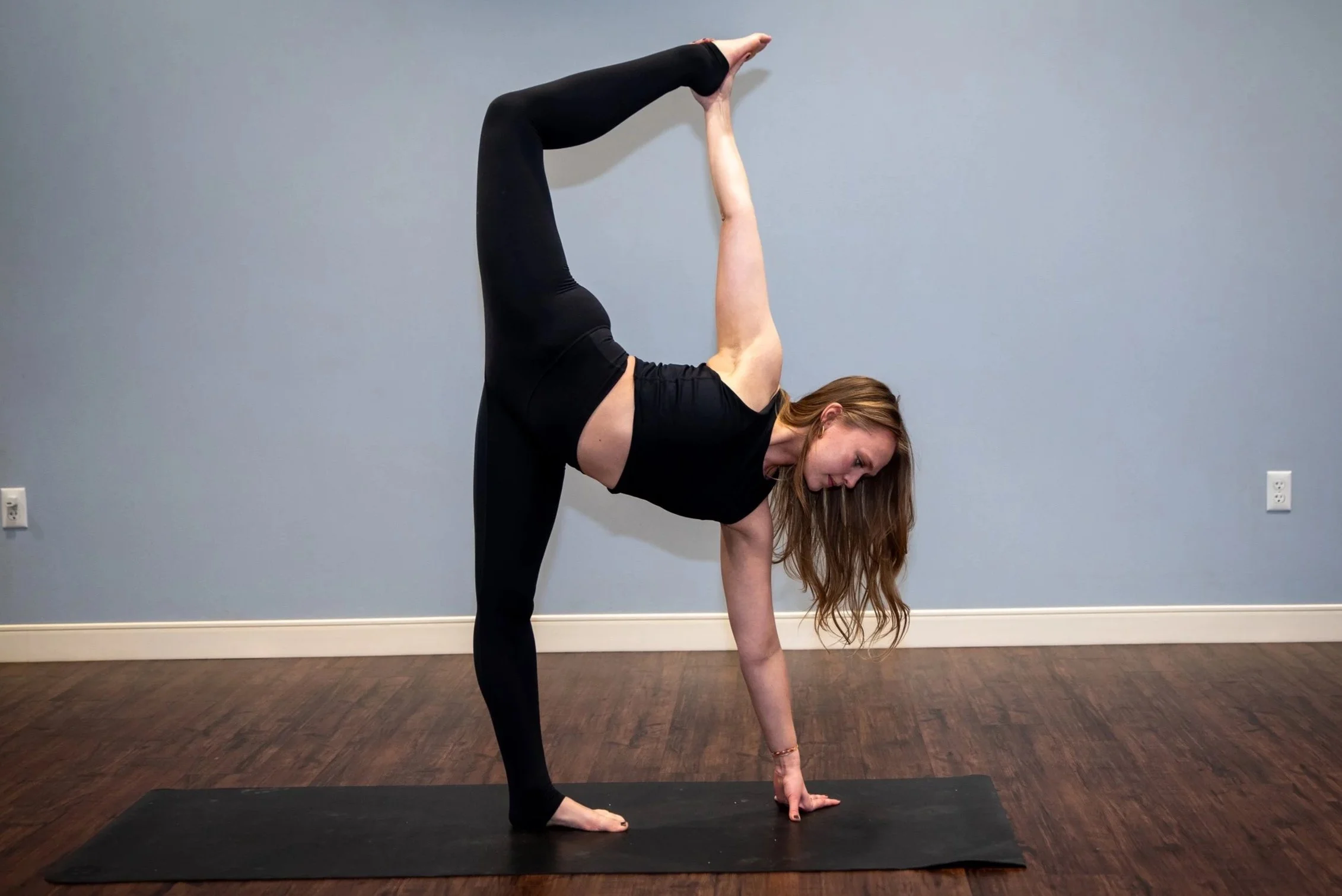
BLOCK party!

Why yoga blocks can enhance your yoga poses:

Did you ever try using blocks for yoga? If not, you should consider incorporating them into your yoga routine.  Blocks can be extremely useful to your yoga practice. They can help provide length, stability, and comfort, but can also create a challenge and are a great way to enhance your practice.

Blocks can help you progress into the more challenging variations of certain yoga poses, helping you build better strength and balance, and allowing your body to get into a more effective shape of the posture.  

Yoga blocks provide: Flexibility, Strength, Support, & Balance

As you work to increase balance and flexibility in your practice, yoga blocks are a great tool. Yoga blocks allow you to safely move into poses so that you are aligned, open, and feeling good. When your are having a hard time performing some poses, for example half moon pose, warrior pose, pyramid, or triangle; the blocks can serve as a supporting tool that you can place your hand(s) on to help bring the floor to you, allowing for added length to your arms and getting full extension in the pose. Choose the block height based on your flexibility. Note that you may choose a different height each time you get on your mat.

Yoga blocks can also provide support. Blocks can support your head and neck during lying positions or support your weight during sitting and standing positions. In a lying position, place the block under your neck to avoid straining your neck or spine. In seated positions, try sitting on a block; either cross legged or legs behind you as in hero’s pose for example. Sitting on a block is a great way to alleviate any tension or discomfort on your knees. When in a standing pose, for an extra challenge or degree of difficulty, try standing on the block (i.e. maybe in tree pose or warrior III) and see how it feels, this is a great way to work your balance and your core.

Additionally, since yoga blocks can help support weight, they can also maintain balance. This is helpful during standing, squatting, as well as sitting positions. Blocks will help you find your center of gravity so you can maintain your balance and hold a position longer, feeling more open and aligned.

So next time you're in class, rather than worrying about how the blocks will make you look, think about how they will make you feel!

 

17 Reasons to Do Yoga in 2017

Yoga is an ancient practice with origins stretching back thousands of years in India. It was designed as a way to help the yogi achieve a more positive outlook on life and a focused, more permanent sense of serenity and peace. Nowadays we also use yoga as a way to help build strength and increase our flexibility. If you think yoga might not be for you, I urge you to reconsider.

I have practiced yoga for a long time now and could not be more grateful that I was introduced to the practice when I was because of all the amazing benefits it has given me. In fact, I love it and believe in it so much that I’ve decided to open my own studio.  

Yoga’s benefits are available to everyone (really everyone)! You may need to find the style or teacher that suits you and your situation, but once you do, yoga has the capacity to change your life for the better. I swear!!!

Below are some of the many reasons why I think everyone should do yoga.

17 Reasons why you should start doing yoga in 2017!

  1. People of all shapes, sizes, ages and abilities can do yoga and adapt it to suit their individual needs.

  2. You can still do it when you’re nearly 100 years old.

  3. It’s a great workout. You can adapt the practice to your own speed and ability.

  4. It helps you become more in touch and aware within your body.

  5. It can help your breathing. A big part of yoga is the breathing exercises, or  pranayama. As someone with asthma, it really helped me to breathe consciously.

  6. It can improve your posture and help you walk a little taller, especially if you're hunched over at a computer all day.

  7. It improves mental health. Yoga is a great way to clear your mind, and alleviate stress.

  8. It’ll help improve your sleep. Yoga is an effective treatment because it addresses insomnia’s physical and psychological aspects.

  9. Sculpt muscles. Yoga uses the weight of your own body to build muscle mass and strength.

  10. It’s great for injury prevention. Flexible, well-stretched muscles will heal and recover more quickly after working out or getting strained.

  11. Yoga is a judgement free zone. Check your ego at the door and get on your mat. Do your best that day and know that our practice may look different everyday and that's ok.

  12. It helps calm your mind. Yoga helps you to slow down and breathe. This leads to greater concentration as you work your way through each pose and creates a calmness that lasts the rest of the day.  

  13. Yoga allows you to become more present in the moment. Put down your smartphone for 60-75 minutes and get on the mat. Let go of your day and settle in, it’s time to take care of you!

  14. It’ll push your limits. There are many types of yoga classes, some gentler than others, but when you find the class that matches your abilities (and pushes them), you’ll amp up your cardio and build whole-body lean muscle mass. Find a class with Power, Vinyasa, or Flow in the title, and you can skip the gym that day.

  15. The more you practice yoga, the better you become at accepting whatever life throws your way. Yoga can help you stay present and positive, even through the hard times.

  16. Yoga helps you to make better choices. Becoming healthier and experiencing all the benefits of yoga will make you more aware and able to choose things in life that support a positive journey.

  17. Yoga makes you feel better. It’s just that simple. It’s why so many people get hooked on yoga. You will always feel better after a yoga class.

Enough reasons for you to try it out?!?! 


Creating Successful Resolutions

With the new year upon us, it’s time to reflect on the year that's passed and begin thinking about the year ahead. Whether or not you have taken the time to think about your goals and aspirations for the next 12 months, a new chapter is here. So it’s important to ask yourself, what do you want to accomplish in 2017? What are you satisfied with in your life, and what changes would you like to make?This is the time of year where everyone makes resolutions, myself included. What I like most about making a resolution is that they are a great opportunity to take back control of your life and begin creating a life that you want, rather than one where you’re just going along for the ride.  When you create a resolution you immediately become empowered to get out and go after what you really want.

What I don't like about resolutions, is that while many of us make a resolution or set a goal, most never actually follow thru. People start out strong- for a few days weeks, and maybe a few months, but then eventually they stop; in fact 80% of resolutions fail.  We need to remember that New Year's resolutions alone don’t hold any power. They don’t just magically happen. It ultimately comes down to you making the right choices to start living your dreams rather than wishing for a change.  When you decide to move forward and begin to make changes, that's when results will occur and change happens. 

So in order to set yourself up for success rather than failure, here are a few things that may help you create resolutions that are founded upon what you want and why you want it.

Tips for forming a New Year’s resolution:

  • Have an honest dialogue with yourself about what you want versus what you don’t want. 
  • Ask yourself why you want and don’t want these things. 
  • Create SMART goals (I wrote these all the time when I worked in schools and they work!) Goals that are Specific, Measurable, Attainable, Realistic, and Timely will help you maintain your resolutions. For example, don’t randomly say that you will lose 20 pounds this year. Get very clear on the why, the how, and the way that you will track weight loss. Be as specific as possible!
  • Develop an accountability system or structure that will help you stay on track to attain your goals long after your feelings of excitement, motivation, and enthusiasm have subsided. 
  • Maybe buddy up with a friend who has similar goals and work through them together or find someone you can talk to about your goals and who can help when you face any challenges. 

Imagine all the possibilities you would create in your life if you simply chose today to make positive changes instead of choosing to continue waiting and wishing.

Happy New Year! May you create successful resolutions!

Vegan Holiday Feast

Whether you’re catering for a crowd of hungry vegans or determined to wow your meat-eating family members with delicious plant-based food, the holidays are a time to go all-out with your cooking. When it comes to designing a festive vegan menu, there are no limits to how creative you can be.

Over the years, I have discovered many delicious foods and recipes, so I have decided to dedicate this week’s blog to helping you create a plant based holiday feast. Here are a few of my favorite foods/recipes. Maybe you’ll become inspired to try a few!

Enjoy & Happy Holidays!

Starters:

Roasted Butternut Squash Soup

Caesar Salad

Main Dish:

I have attempted to make lentil roasts, but found that nothing can compare to Trader Joe's Turkey-less Stuffed Roast . It’s sure to be a crowd pleaser.

I don't love the gravy that comes with the Trader Joe's Roast, so I make my own.

Brown Gravy

Side Dishes:

Maple Glazed Carrots

Crispy Brussel Sprouts

Vegan Mashed Potatoes

Green Bean Casserole

Mixed Mushroom Stuffing

Cranberry Sauce

Dessert:

No meals complete without something sweet. The Minimalist Baker has a ton of delicious vegan treats. Here’s one of my favorites… because who doesn't love PB… I certainly do!

Vegan Peanut Butter Cup Pie

There you have it – a hearty Christmas feast sure to satisfy everyone at the table and no animals lives were taken to make a delicious and healthy meal.

Cultivating Gratitude

What are you grateful for? Have you thought about it? Do you show gratitude in your daily life?

At times, I often feel that we take so much for granted and forget about all the good that is present in our lives. Instead, we think about all the things our lives are lacking. However, when we stop and look around, this life is pretty amazing and we have so much to be grateful for.

In an effort to remind myself and others of all the things we should be grateful for, I’ve decided to dedicate this week’s blog to the idea of gratitude! Enjoy :)

What does gratitude mean?

Gratitude means thankfulness, counting your blessings, noticing simple pleasures, and acknowledging everything that you receive. It’s a conscious awareness of how much we’ve been given. Gratitude shifts our focus from what our life lacks to the abundance that is already present.

What research shows:

Behavioral and psychological research has shown that giving thanks makes people happier and more resilient, it strengthens relationships, it improves health, and it reduces stress. Isn't that enough reason to practice gratitude?

What can we do to practice gratitude?

I found a gratitude exercise online by Marelisa Fabrega that I wanted to share.  Start by imagining that you lost some of the things that you take for granted. For example,  your home, your ability to see or hear, your ability to walk, or anything that currently gives you comfort. How would you feel? Then imagine getting each of these things back, one by one, and consider how grateful you would be for each and every one of them.  Next, start finding joy in the small things and allow yourself to feel gratitude and joy instead of holding out for big achievements, such as a new job, a promotion, having lots of money in the bank, getting married, having the baby, etc…

How can we appreciate and learn from the difficult times in our lives?

Gratitude can help you put things into perspective, especially during difficult times. When things don’t go your way, remember that every difficulty carries within it the opportunity for an equal or greater benefit. When facing challenges, think : “What’s good about this?”, “What can I learn from this?”, and “How can I benefit from this?” See how your perspective can change.

Ways to practice gratitude:

  • Create a gratitude journal
  • Write daily lists of all the things you are grateful for
  • Thank a positive influence in your life
  • Write a letter or note to a family member or friend

A few of the things I am grateful for:

  • My husband, my best friend and my rock, who loves and supports me & always has my back.
  • My family for their unconditional love and support.
  • My friends for their trust, honesty, and keeping me in line when I get a little crazy ;) You all inspire me and make me want to always be and do my best!
  • My 3 dogs who are always happy to see me. They're the best cuddlers around.
  • My health and my ability to run marathons, which I thought I could never do.
  • For my work and the ability to open a yoga studio and share the joys and benefits of yoga with others.
  • Good music that makes me smile, dance, sing-a-long, and lifts me up when I am feeling down.
  • Books, TV shows, & movies that help me unwind and escape for a bit.
  • Holiday lights and the way they sparkle and glow.
  • Family dinners when we share stories of our past and also create new and lasting memories for the future.
  • And of course, my readers, who actually read my blog posts lol ;)

Once you begin looking for things to be grateful for, you will find that you begin to appreciate simple pleasures and things that you previously took for granted. Remember, gratitude shouldn’t just be a result of getting what you want, but an all-the-time gratitude, the kind where you notice the little things and where you constantly look for the good, even in difficult times. Start today and begin  bringing gratitude to your experiences, instead of waiting for a positive experience in order to feel grateful.


gratitude and love.jpg

Keep a Contented Heart

A couple years ago my husband and I read The Happiness Project by Gretchen Rubin.  I recently revisited this book because I’ve begun to find myself needing a few reminders about what happiness means and how to find happiness in our life, especially when things become difficult for us.  

So I decided to pull the book back out and revisit the chapter, November. Keep a Contented Heart is the heading for this chapter.  I started reading and thinking about this idea. What does “keep a contented heart” mean? Well literally, according to the dictionary, “contented” refers to happy and at ease, and “heart” is the organ that pumps our blood and is also the central or innermost part of something.  So having a contented heart means to be happy at your core.  Would you say that you have a contented heart right now? My immediate answer is no, but after some more thought, I would answer yes and I am sure you might too.  At first, keeping a contented heart can feel like a giant task, but it doesn’t have to be. In fact I think it can be easily attainable.

I think one of the most important things that leads to happiness is attitude; which Gretchen writes about in the chapter.  I believe attitude speaks volumes about how to achieve a contented heart.  If you can master a good attitude about whatever comes your way, good or bad, it can go a very long way to building your happiness level. I work daily on keeping and maintaining a positive attitude about life, even when I feel derailed or when life gets hard.  I awake each day with the mantra, “It’s a great day to be alive” and work hard to live up to that mantra by trying to achieve greatness each day.

And when I refer to greatness, I do not mean having power or wealth.  To me, having greatness can mean something a little different every day. It can include setting small, attainable goals that I set for myself.

For example:

  • attempting a new arm balance
  • running a faster mile
  • PRing my deadlift
  • complimenting someone
  • acknowledging someone’s hard work
  • It can also mean having the courage to stand up to injustice and the ability to help and be kind to all (i.e. people, animals, the environment).

For example:

  • being a vegan or vegetarian
  • not polluting our environment
  • offering support to someone who needs it
  • being a voice to the voiceless

As a former learning consultant and now yoga teacher and studio owner, I have spent my career caring for and teaching others. I believe in the importance of helping, supporting, and being kind to all beings and share that belief with my students through my words and actions.  I try to not take anything for granted and appreciate the small gifts in life.  This positive attitude, will, and desire to live a good, strong, and kind life has helped me to work towards achieving a contented heart.  I believe that it is important to be grateful for the things we have, tell the people in our lives that we care about them, and do something each day that will challenge us and help to make us better, because we never know if this day will be our last. Live it up!

November after all is the month that contains Thanksgiving, and it is a great time to work on having a contented heart. It’s a month that focuses on gratitude, thankfulness, and counting blessings both big and small. What better time to work on this?  There is no time like the present!

What can you do today to help you have more of a contented heart tomorrow?